Friday, January 19, 2007

So Few of Me!


In my current line of work, this is the busiest time that we have. We have distributed assessments, answered questions, and begun to prepare for regional scoring of ELA assessments. Now we have the pleasure of watching scoring DVDs to prepare for three straight weeks of training and scoring the ELAs. We'll catch our breathe for a few weeks and start all over again with Math.

On top of that - life still must go on and districts still want trainings in writing and data and curriculum mapping. And I am still trying to keep my New Year's resolutions of no work email after 5 pm and hitting the gym at least 5 times a week. (Keeping the first and falling behind on the latter.) No small wonder that I wish sometimes I could clone myself (only thinner!)

And that is exactly what Peter H. Reynolds does with Leo in So Few of Me. This creator of The Dot and Ish is among my favorites - I'd line up for his grocery list if he published it!!! I never fail to find inspiration in the simple stories and wonderful illustrations. (See my previous posts on his work for more about this wonderful author.)

In this tale, Leo is a busy lad. Like most of us, no matter how hard he worked there was always more to do. So he makes a list. That list grows and grows and grows. So he thinks "If only there were two of me." (Sound familiar?)

Lo and behold - there is a knock at the door and another Leo appears. But as the two Leos work, there is still more to do. And eventually two Leos becomes three, becomes four, becomes TEN!! And still there is work to be done.

The original Leo is exhausted and takes a nap. He awakens to find the other nine Leos staring at him asking "What are you doing?" He smiles and answers "Dreaming" and slowly the other nine disappear. And Leo wonders, "What if I did less, but did my BEST?" One Leo would work - and he would have time to dream.

I think in our rush to make sure that we "cover" our course materials and ensure that students are prepped for tests, we forget that they are still just kids (even in high school!) There is life outside of school. And that is exactly why this book is so important - we need to decide what is really important, and teach that. We need to encourage our students to dream - to be creative - to explore and take risks. That is all part of learning too.

The message is simple but the writing is powerful - a great mentor text for us all in our multi-tasking world!!

Wednesday, January 17, 2007

Write for Your Life

The death of my grandfather almost 11 years ago is one of the moments in my life that has left an indelible mark. I knew instantly when my mother was finally able to reach me at work that something horrible had happened, although she never really said what. A giant black hole opened in my heart, that honestly has never healed.

My grandfather was a rock in my life - someone who encouraged me to be anything I wanted, who knew to just hold me when I had "that look" on my face, who loved me so much that he separated out the orange, yellow and green jellybeans into a separate container because I liked them least. Some people called me spoiled, I knew I was loved; absolutely and unconditionally.

But he left my life suddenly - fell over from a massive heart attack while sitting and reading in his chair. My grandmother had gone into the basement to do laundry and came up to find him on the ground - already gone. We didn't get to say good-bye, we didn't get to say "I love you," we didn't get to say anything.

That's when I started writing again. I was convinced that no one knew the pain that I felt, the sense of loss, the anger. So I wrote to get it out of me, to try to move through the stages of grief that everyone said was "natural." And after I wrote for me - I tried to write for others. To tell them what they meant to me or if they hurt me, to say I was sorry or to say "I love you."

The hole began to heal with the birth of my first niece six years ago. This amazing creature came into my life, with a middle name to honor my grandfather, and suddenly not much else mattered. Being able to see her grow and to experience life anew with her (and Sydney and Zoe and Brody who followed) has given me new reason to write.

So Anna Quindlen's column in Newsweek this week has ripped at my heartstrings. It covers the movie "Freedom Writers" (that I have yet to see but have it on my list!) but more importantly it talks about why we write: "writing can make pain tolerable, confusion clearer and the self stronger."

But we lose something in translation with writing - email gets misconstrued, people write in code and never say what they mean. People are afraid to put something in writing because it could be used against them. We write (or don't write) for all the wrong reasons.

Quindlen leaves us with a powerful message:

Think of all those people inside the World Trade Center saying goodbye by phone. If only, in the blizzard of paper that followed the collapse of the buildings, a letter had fallen from the sky for every family member and friend, something to hold on to, something to read and reread. Something real. Words on paper confer a kind of immortality. Wouldn't all of us love to have a journal, a memoir, a letter, from those we have loved and lost? Shouldn't all of us leave a bit of that behind?


Amelia writes every day. This thrills me beyond belief and I hope that she never loses that joy for putting her thoughts to paper. In the meantime, I write for her and Sydney and Zoe and Brody each and every day as well. They are not spoiled - they are loved.

Sunday, January 14, 2007

What kind of English do you speak?

I never knew that I had an accent until I went to college in central NY. Growing up in western NY, everyone around me sounded just like me. Imagine my surprise when classmates made fun of the fact that I liked to drink "pop!"

Words can be funny.......take this test over at Blogthings so see what kind of American English you speak!!


Here are my results:

Writing Framework's Linguistic Profile:
40% General American English
30% Yankee
20% Upper Midwestern
5% Midwestern
0% Dixie

Sunday Funny: What's the caption for this one?


Image and story from Engadget.

Friday, January 12, 2007

History of Writing


The book for this week combines my two great loves - history and writing.

Snow Flower and the Secret Fan by Lisa See is set in nineteenth century China and is told from the perspective of Lily, a peasant girl from the remote Hunan county. Lily becomes a laotong ("old same") with Snow Flower, a very metropolitan girl by comparison, and by tradition the two are bound together in a life-long friendship. The story follows the girls as they grow into women - which includes footbinding and arranged marriage, motherhood and loss.

While the story itself is compelling and at time heart wrenching (it amazes me the pain that women endured to have their feet bound), it is the little know nu shu that I found fascinating. Nu shu was a secret Chinese writing form, believed to have been invented by an emporer's concubine to speak truthfully about the lonliness that surrounded her to her family at home. It grew into a method for women to find consolation from each other and was hidden in embroidery, weaving, and in paintings on fans. The author shares how she discovered and researched this remarkable language, long with great photos, on her website and also provides a sample chapter.

I know it sounds strange - but in many ways, thinking about nu shu made me think about the IM language that we all complain about showing up in our student writing. Chinese women were forbidden from using the written language of men and in a desperate need to communicate with family and friends, invented a code that they ingeniously hid within "women's work." Kids aren't forbidden from writing - but they have invented a language to find their sense of self and to keep things away from parents and teachers. We've all heard the stories about the trouble with social networking and parents everywhere seem to be afraid of IM'ing - but if we took a step back, perhaps we'd find that it's not so bad to have them writing in their own "language" (once in a while.)

Monday, January 08, 2007

An Even Better Contest

Via a Year of Reading, found the Lisa Yee's Bodacious Book Title Contest!!

Rules are simple:

1. Think of a title from a children's/middle grade/young adult book.

2. Change the FIRST LETTER of ONE of the words to make it into a whole new title.

3. Then add a sentence describing the new book.

I'm no celebrity judge but there are some great ideas in the comments section (I accidentally copied one of the first - so much for my close reading!!) Here's one of my favorites:

Fear Mr. Henshaw: After years of writing about his personal problems in letters to his favorite author, Leigh’s name winds up in Mr. Henshaw’s latest novel: The Stalker. (From Jay over at Disco Mermaids - another great blog!)

Enjoy!

Sunday, January 07, 2007

Sunday Funnies

ELA season officially opens next week and kids all over NYS will be reminded to eat a good breakfast, go to sleep early and have the required No. 2 pencils sharpened and ready to go. In our region - erasers have become optional as students need only cross out the incorrect answer on the answer sheets. But I digress.....

In looking at the assessment data from last year, many districts in our region have started to notice that kids at all grade levels missed questions that required them to select the "best" answer. This is a question that requires some critical thinking and the bad news is that our students aren't doing too well.


When I think back to asking my students to brainstorm answers in class, I realized that all answers were accepted and written down on our graphic organizer. And I mean ALL answers - the ones that made me cringe, the ones that were duplicates, the ones that were literal, and the really good ones. I never made a point of distinguishing between the good and great answers - so that I could preserve their self-esteem of course!


So I have been discussing with the teachers in our region how we could start to have students determine the best answer. One strategy that we have come up with is to share pictures with the class and ask the students to brainstorm discriptor words or a caption. ALL answers would be listed - but then we would go the next step in asking students which suggestion was the best. Of course - any answer would have to be supported with details, details, details.


It seems simple but it might have some interesting results. Anyway - I thought I might share some of the funny photos I have collected over time each Sunday in order to help those who might want to try this strategy. And - as a means of getting teachers to write!!


I'll post the picture each Sunday - if anyone is reading, feel free to provide the caption in the comments section!!! Here's the first one:


Photo reference: http://www.comedy-zone.net/pictures/index.htm


Friday, January 05, 2007

Teaching with Fire!


As we all slowly ease back into our routines after the holidays, I thought I would share a book that not only inspires other writers but involves teachers writing about their inspiration from poetry.


I was first introduced to Teaching with Fire (edited by Sam M. Intrator and Megan Scribner) at a Step Up to Writing trainers conference in Fort Collins, Colorado about three years ago. Two wonderful teachers from California befriended me in that brief time and shared things with me that I have never been able to repay. One, Linda Toren, is featured in this book (page 204). She and a colleague email each other haiku and tanka once a week "to keep each other inspired and hopeful - to celebrate and commiserate."


They continue to inspire me (we have long since gone our separate ways) through this book they shared with me as it sits on my coffee table full of post-it notes and dog-eared. It is a poetry book - but each poem is accompanied by a brief story from a teacher explaining the significance of that poem in their life's work. You will hear throughout the book talk of writer's notebooks and poetry reads, of students and families, of joy and heartache. I promise you it will be a fresh read every time!!


I could go on and on about how this book could be used in the classroom, instead, I'll just share this:


You Reading This, Be Ready


Starting here, what do you want to remember?

How sunlight creeps along a shining floor?

What scent of old wood hovers, what softened

sound from outside fills the air?


Will you ever bring a better gift for the world

than the breathing respect that you carry

wherever your go right now? Are you waiting

for time you show you some better thoughts?


When you turn around, starting here, lift this

new glimpse that you found; carry into evening

all that you want from this day. This interval you spent

reading or hearing this, keep it for life--


What can anyone give you greater than now,

starting here, right in this room, when you turn around?


- William Stafford


Reference: Teaching with Fire: Poetry That Sustains the Courage to Teach. Intrator, Sam and Scribner, Megan (editors). Jossey-Bass, Inc, 2003.

Thursday, January 04, 2007

New Year's Resolution

It has been a rough December. First a serious bout with a stomach virus - which ironically struck in the middle of a writing workshop. (How many different words can we use for the color green?) Then the mad dash thru the holidays - balancing family and sanity and high caloric foods. Through it all - I decided that I work too much. I can't say work too hard because I truly love what I do (most days!) but it has become all consuming.

However - having unburied myself from 563 work emails and over 265 personal emails (mostly listservs on this one - I'm just not that popular!) I realized that completely shutting down is not the answer. And I missed my blog!!

I don't make New Year Resolutions - I think they just set me up for ultimate failure. I mean ultimately - I fail to keep them. But I do make Previous Year Reflections. Here are some of mine:


1. Teachers who really care about kids are the ones I want my kids to have. No real news flash there but I have been honored to work with some great teachers this past year (and so far this year!) Ones who really push themselves to reach their kids for the right reasons. I miss my classroom - but I love when I am surrounded by these people! So thanks to Karen and Dana and Melodee and Sue and Nina and Lisa and Donna and Maria and yes, you Gene!! And to the countless others that I have forgotten to mention here!

2. Writing is risky business. And hard. And very, very scary. I know because my comfort zone is in teaching writing to others - and in coming up with ways to engage others in writing. But when pushed to write something meaningful of my own - I suddenly find cleaning my bathroom a most desirous chore!! And so....

3. I better start to practice what I preach. I teach writing - therefore I should be writing!! So I will be writing and submitting articles to educational publications and entering the writing competition in our local newspaper (historical fiction - that's me!!)

4. There is nothing that should come before friends and family. No matter the petty things we do to each other or say in moments of anger/stress/confusion/hurt - those people that we can count on in times of need are the golden threads that hold us together. You all know who you are and I can't thank you enough for all that you do and are to me!!

So have a wonderful 2007 everyone - let bygones be bygones - and don't work too much!

Thursday, November 30, 2006

Live Writing

Normally on Fridays I share a piece of literature that I have used as a mentor text to work in developing student writing. What I want to share today is a book that can be used as a mentor text, but is also something that every writer should own. Ralph Fletcher's Live Writing: Breathing Life into Your Words.

I was introduced to the work of Mr. Fletcher via a listserv of "RealWriting Teachers" and it is because of him that I now keep my own writer's notebook. But this book is particularly special because it follows the philosophy that I have that words are powerful tools. In Live Writing the focus is on the craft of writing and how to choose words that lift off the page (as opposed to YAWN! most textbooks). What follows are some tips that I love:

  • "Here's the good news: most of us are not born writers. We were not born with a pencil in our tiny fingers. And very rarely do the words flow clear and sparkling the first time we try to write them down. Most of us have to work at our writing."
Imagine how powerful that would be to share with our students - that writing is work!! That it is OK to revise and revise and revise. And that WE (teachers) struggle with it too!! And imagine if we showed them that by sharing our own writing!!

  • READ like a writer!!If you want to improve your writing, you have to apprentice yourself to the best writers you can find - writers that you can learn from......and reread the writing to find out how the writer pulled off the effect!
How many times have you heard me say this about mentor texts!! It has ruined some of my reading - as I am always looking to see how someone said something or the details they used to paint the picture I drew in my head. But I think it has helped me understand the craft of writing better - and more importantly what I want my writing to be like.
  • "Write low on the food chain...Most people, adults as well as kids, tend to write too high on the food chain. They write about big ideas - jealousy, love, nuclear war - instead of seeking out small details to suggest the larger issue." (p. 100)
Details, details, details. I've even noticed this when people talk - they speak about lofty ideas but when you press them for examples or to provide more details they can't give you anything!! Do they really know what they are talking about? Have they thought about it? Could you communicate your big ideas in writing?

I don't think that this book is intended to be read alone - meaning that someone should be writing along with reading it. The tips and strategies for the craft of writing, if just read, are meaningless. If you are going to read about being a writer, you better be writing as well. If you need a "textbook" to make better writers - I suggest this one!

Email Tips

Email has become one of the most common means for me to communicate these days. (I might have said cell phone in the past but I have this new Bluetooth that is causing me problems!!Is there a dentist for a Bluetooth problem?) However, email is one of the worst ways to communicate as well as it seems to always get misinterpreted. Even when you use a smiley face :-) or a frowny face :-( or a confused face :-s the emotion can be lost or mistranslated.

Email, and it's cousin instant messaging, have also led to a brand new dictionary of "words" - things like LOL, POP, and CYA that somehow work themselves into student writing. I recently led a scoring training where I asked teachers to list their "pet peeve" in student writing before we scored any test papers so that they would not get distracted when those pet peeves appeared. You would be amazed at the elementary teachers who had IM codes on their list!!!

Via Lifehacker, I came across "Mr. Lincoln's T-Mails: The Untold Story of How Abraham Lincoln used the Telegraph to Win the Civil War." Tom Wheeler, the author, has a great post there on the lessons of Mr. Lincoln and how we could use them in our own electronic communication. Here are the highlights:

  • Hierarchy of Communications : Electronic messages were Lincoln's least preferred means of communicating. First on his hierarchy were direct, in person exchanges...I have become more aware that emails are not a substitute for walking down the hall or picking up the phone
  • Words are Important - When he used an electronic message Lincoln maximized its impact by using carefully chosen words. His August 1864 telegram to General Grant, "Hold on with a bull-dog grip, and chew and choke" could not have been more explicitly expressed. Emails, on the other hand, have tended to become the communications equivalent of casual Fridays, substituting comfort and ease for discipline and rigor.
  • Less is More - Whereas many saw the blank telegraph form as an invitation to an essay, Lincoln's telegrams were short and to the point. "Your long despatch of yesterday just received," Lincoln chided General George McClellan about a 10-page telegram sent in May 1863. Then the president required only three additional sentences to reply to the general's endless essay.
  • Message Candor - Honest Abe was frank and direct in his communications. "If you and he would use the same frankness to one another, and to me, that I use to both of you, there would be no difficulty," Lincoln wrote General Joseph Hooker in June 1863 regarding the ongoing feud between Hooker and General-in-Chief Henry Halleck.
  • Take a Breath - If frankness and candor are a virtue, they also require judicious application in electronic messages. Just because it is possible to instantaneously send a message doesn't mean it is appropriate to do so...Responding to a September 1863 telegram from General Ambrose Burnside, Lincoln wrote in a reply telegram, "it makes me doubt whether I am awake or dreaming. I have been struggling for ten days...to get you to go assist Gen. Rosecrans...and yet you steadily move the other way." After fully venting his frustrations Lincoln turned the page over and wrote, "Not sent." Hitting the "Send" button on an email is an easy, but irreparable, action.
  • Reading Other People's Mail - Abraham Lincoln's habit was to walk into the War Department telegraph office, open the drawer containing copies of all the telegrams received, and read them all, regardless of to whom they were addressed. Through this procedure Lincoln had a keyhole into the thinking of his generals and activities in the field. The "cc" and "Reply All" function of email provides a similar opportunity for us to stay informed.
  • The Value of a Hand-Written Note - Lincoln's appreciation of the telegraph was because of its ability to instantaneously communicate over great distances. Where a face-to-face meeting was not possible he preferred a well thought out letter. In such letters he would cogently lay out his thoughts as well as respond to issues he imaged the recipient would raise. Something handwritten is also more physically and emotionally powerful than an impersonal message over the wires. When for instance, Lincoln congratulated General Grant for his Vicksburg victory in July 1863 his statement, "I now wish to make the personal acknowledgement that you were right, and I was wrong" was made all the more significant by coming direct from the president's hand.
Because email is so commonly used, I think that we have an obligation to teach our students (and colleagues) how to use it appropriately. This site has some other great examples that are worth checking out.

IMHO, good old Abe still has a great deal to teach us! :-)

Tags:

Sunday, November 26, 2006

Waking Up from Thanksgiving

I finally have some downtime this holiday weekend - the Bills game is blacked out, Pittsburgh is losing miserably (WAHOO!!)and my beloved Sabres don't play until tonight! I use my Friday posts for sharing a book to help in teaching about writing - but I must admit that despite the stack of books on my coffee table to be read, I read mostly sales fliers this weekend!! Not that this is a bad thing - I have all my shopping done, the rest is just icing on the cake!!

Although I shopped and ate my way through most of the weekend, I still had some time to reflect on writing. (Sad, I know, but it is my passion!) I've been thinking a great deal about the "new literacies" of the Web 2.0 and the possibilities that it holds for education. I have specifically not posted on this topic on this blog because I maintain another (Grand Rounds) with a colleague for that type of thing. But the lines have started to cross...

I began blogging as a way to create a community of learners around teaching writing. I have the honor of facilitating many workshops on writing in our region and I say honor most sincerely. I am passionate about teaching writing and the power of writing and am grateful to the teachers who spend time with me reflecting on and investigating their own writing practice. My hope is to continue that learning via this blog, long after the designated day of my visit has passed. I believe that we must be learners if we are to teach - otherwise, we are not good models for our students.

But a recent post by Will Richardson has me thinking. Will writes about a discussion with a high school English teacher who has begun to use Web 2.0 tools in the classroom:

We talked at some length as to whether reading for our students is much different than reading was to us. Whether they are reading in different ways, specifically through video or other media, and whether those reading literacies are equally as important as text literacy. Whether we are just chained to our old definitions of what reading should be because that’s how we’ve experienced it. Whether now that we can connect to so many different texts we shouldn’t be surprised that most students find Of Mice and Men irrelevant and uninteresting. Whether we should be rethinking what reading literacy means.


WOW!! It brings me back to an inservice day in my district where I led a group of teachers to investigate what literacy means in their content area. You see - I believe that each content area has it's own literacy components, that to simply teach a student to read or to write means nothing if we don't expose them to multiple types of text. Classic literature, graphic novels, technical writing, primary sources - all contain words but to decipher their meaning takes a bit of a different skill. And to emulate that writing - to write like a scientist, a historian, an engineer - those take another set of skills. It is out obligation (or moral imperative as Kim Moritz writes about) to teach this literacy to our students in order for them to be successful. But on that inservice day - I was informed by some of the teachers (well, two to be exact!) that students haven't changed in 37 years (i.e. they are lazy.)

I heartily disagree - students have changed tremendously! The students I taught were not the same type of student that I was and I was not the same as my parents. The folks who haven't changed in those 37 years are the teachers - those who believe that some can learn, and some cannot. Those teachers who are there to impart their knowledge, rather than to grow and nurture the knowledge of others. I don't think Of Mice and Men is irrelevant or uninteresting in this day and age - but those who are teaching it might be!!

Don't get me wrong - I am not bashing teachers! I am one!! Instead, I think it is time that we open up our doors, see the world that awaits our students, and start preparing them for the future. We don't know exactly what that looks like - but we can at least start using tools from this century!! Lots of folks I talk to lately aren't sure what that looks like, but I recently found this from a 16 year old student who might help frame it for us(Thank you think:lab!):

So here is what I am proposing. The way classes are taught should be split into three sections: Teaching of Information and Methods, Thinking, Discussing, and Re-working, and then Producing Content and Spreading your Knowledge to others. In more detail below.

Teaching of Information and Methods
This is what you think of when you think of school. Textbooks, sitting behind desks, taking notes, and being sent home to memorize the information, only to come back and take a test. This is necessary for the next two parts.
Thinking, Discussing, and Re-working
Talking about what you learned. Focusing on current events and news. And looking to the future. This part could have a little unconference feel to it.
Producing Content and Spreading your Knowledge to others.
This is the part that the internet enables. Creating videos, podcasts, blog posts is at the heart of this part of the class. Being able to publish books through LuLu. This allows students to spread knowledge that was learned in the first part and the new ideas that were generated in the second part.


I think Will's right - it's time to rethink literacy....but let's start doing it with kids!

Friday, November 17, 2006

What are YOU so grumpy about?


When my pre-K niece is upset with the smallest of slights – from holding a different niece to not allowing her to have chips before dinner – she puts her nose in the air, crosses her arms high on her chest, and turns away. Of course, she then keeps peeking at you to see if you are watching……

Kids are funny that way. They give you obvious signs when they are upset and you can immediately apply any of the cures – hugs and tickles work best.

What Are YOU so Grumpy About?
by Tom Lichtenheld is full of great illustrations and runs through about 13 different “causes” of grumpiness from receiving a gift you don’t like to having to eat “adult” cereal. The illustrations add to the text by having little cartoon comments and great details. This is a book that is a great read-aloud!! Additionally, inside the front cover are many things to do to “cure” grumpiness – this is a book that literally can be devoured cover to cover!!

A group of teachers I have been working with lately have been using this book at the elementary level to work on Two-Column Notes from Step Up to Writing. Here are three different ways we used them as we tried to perfect our lessons.

The first teacher practiced reading the book aloud and having the students take notes on the left hand side of the paper for causes of grumpiness – adding details in the right hand column from both the illustrations and the their own experience. She found that 13 different causes was too many for kids to handle, so the second time she did it – she provided the students with papers that had 5 stars already placed on the left hand side. This was intended to guide the students to listen for at least five things and focus on those. A third grade teacher followed a similar model by reading the book aloud, then creating the notes together as a class using the two-column note method.

I shared the work of these teachers with another group while we were discussing the listening passage on our state ELA assessments. The common concern was that in these instances, students are asked to take notes without knowing the questions that they are going to be asked. As a result, analysis of student note taking pages indicates that they are taking pure script notes, despite the strategies that we are teaching them. Having this book conveniently in my bag – we tried an experiment.

I read the book aloud to the teachers, highlighting and drawing their attention to the pictures. They listened and watched, taking no notes. I then asked them to listen a second time and take note in any format that would work for them. After they took notes, we then worked to categorize them using two column notes. For example – Were the causes of grumpiness home or school? A person or an event? The teachers then completed the two column notes using their original versions.

We haven’t tried the second version with students yet…but have come to realize that providing an organizational structure for notes or enabling students to create their own is critical!!

Saturday, November 11, 2006

Lest we forget...


In Flanders Fields poppies blow
Between the crosses row on row,
That mark our place; and in the sky
The larks, still bravely singing, fly
Scarce heard amid the guns below.

We are the Dead. Short days ago
We lived, felt dawn, saw sunset glow,
Loved and were loved, and now we lie
In Flanders fields.

Take up our quarrel with the foe:
To you from failing hands we throw
The torch; be yours to hold it high.
If ye break faith with us who die
We shall not sleep, though poppies grow
In Flanders fields.


In Flanders Fields
By: Lieutenant Colonel John McCrae, MD (1872-1918)
Canadian Army


There is power in the written and spoken word. If there wasn’t – people wouldn’t die to preserve our fundamental right to speak/write our opinions. We have a responsibility to remind our students that we owe our tremendous freedoms to many people who have died for it. It’s Veteran’s Day – so I thought it appropriate to remind everyone of the now famous poem that was written to capture the horrors of World War I.

We are engaged in another war at this moment, but unless we have been personally touched by a loss, it still seems far removed from our lives. Perhaps we have been numbed by constant media exposure of the conflict or perhaps violence in our lives have become commonplace. Perhaps there are too many causes for us to wear ribbons for that they yellow gets lost amongst the rainbow of colors.

I love what the folks over at Just One More Book! have done with their freedom of expression. (Thanks Technospud for the link!) Gathering in a coffee shop – they discuss the children’s books they love and why they love them. The most recent? A Poppy is to Remember – based upon the poem that opened this blog. Listen to the podcast to hear them describe the book and how their children loved it – as well as the connections to learning about war (and peace!) Podcasting is a great way for students to express their freedom of speech!


I also think my students would be amazed to learn that one of their favorites, Captain Underpants, made the Top Ten List of Most Challenged Books in 2005 for “anti-family content, being unsuited to age group and violence.” Of the list that same year are the classics “Of Mice and Men” and “The Adventures of Huckleberry Finn.” Banned Book Week , designated by the American Library Association as the last week in September, took on new irony as a display of banned books was banned! What better way to demonstrate the freedom of speech (and develop critical thinking skills) than to have students read a “Banned Book” and blog as they read their thoughts on why it might have been banned. Is it language? Content? Something else? Authentic and engaging: what kid won’t be drawn to something banned?

Times like these I miss having my own classroom! Every day should be Veteran’s Day!

Friday, November 10, 2006

I picked up Stanley from the breeder four years ago this New Year’s Eve. He was a tiny bundle of white fluff, full of energy and wanting to play. I’d never trained a dog by myself before so we went to “Puppy School.” Stanley was a stellar student. We gained a “Canine Good Citizens Award” and we contemplated having him trained as a therapy dog. Of course, my friends and family never believed me because he didn’t exhibit those traits at home. Four years later – he still doesn’t.

I know when Stanley is upset with me for working too much – he’ll pee on my computer bag. He knows when I will be traveling again – so he steals pantyhose and undergarments from my suitcase as I pack. And he has lately decided that he is enough a member of the family to join us for dinner – on the table of course. He’s a smart dog – probably smarter than me!! And at the end of the day when he is curled up next to me snoring softly in my ear, it’s hard to be angry with his antics.

So you can see that I have a real connection with Dear Mrs. LaRue: Letters from Obedience School, written and illustrate by Mark Teague. In fact, I do believe that I hear Stanley’s voice in Ike, who is sent to Brotweiler Obedience School by his owner Mrs. LaRue after several disturbing incidences at home including eating chicken pie, howling while she is away, and ripping her camel hair coat.

In addition to using Ike’s letters to teach about voice, this picture book is ideal to teach about persuasion and the art of exaggeration. For example, as Ike paints a picture of the “warden” and his “severe” punishment for not sitting and staying (shown in black and white), reality is a comfortable environment of happy dogs and a caring teacher shown in color. Students will get a clear picture of how to provide facts to support their particular opinion, as well as how to pull apart the editorials of others to ask additional questions.

The Writing Fix provides interactive activities for students and Scholastic you provides some additional ideas for using Dear Mrs. LaRue with students but a piece you will certainly want to share with students is how the author gets ideas for his stories:

“For Mark Teague, a story starts from his "notebooks full of sketches and scribbles, strange little drawings and phrases…" His inspiration for the character of Ike in Dear Mrs. LaRue came from two dogs in his life. His own dog, Earl, was a master food thief, and his brother's dog, Ali, actually limped when he wanted attention!”

The more we can have students use writers notebooks and write about things that are important to them, the more engaged they will be as writers. And they’ll keep on writing!!


So - what's your pet been up to lately?

Monday, November 06, 2006

This I Believe...

Monday mornings are rough for me. I never accomplish what I want to over the weekend: my house is a minor disaster, I didn't rake leaves, and work seems to pile up rather than dwindle. Plus, anyone who know me knows I am not a morning person.

But I listen to NPR to get my news fix in and have become hooked on Monday mornings in order to get my "This I Believe" fix. According to it's website, This I Believe "is a national media project engaging millions of people in writing, sharing, and discussing the core values and beliefs that guide their daily lives." Based on a radio program from the 1950's hosted by Edward R. Murrow, the NPR program allows anyone to write the essay and submit it to the site. Original essays from the 1950's program are also available.

In researching the NPR site, I found an incredible blog with podcasts of "This I Believe" statements from ninth grade students. The student's voices are rich and many are very emotional - it is powerful to here these statements and I wonder how those statements will change in the years to come. This is an incredible writing challenge - and these students rose to the occaision.

In a recent workshop on writing, I asked the participants to write their own "This I Believe" statements about writing. My intent was to have them frame their thinking about writing BEFORE we started looking into the 6 Traits and Step Up to Writing. My intent was to have them capture their passions about teaching writing- so that voice did not get lost as we became immersed in strategies.

I am not sure how I did. I did not have them share their statements - I felt they were a little too personal, too intimate to share with the peers. I might have been wrong...

In any event, "This I Believe" statements are powerful writing. I am still crafting mine about writing. When it is done, and meets the requirements of NPR, I will post it here. And I just might submit it to NPR as well!

What do you believe?

Friday, November 03, 2006

Mentor-Mentee Relationship

Fridays are about mentor text. Up to this point, I have shared picture books and chapter books that can be read aloud as examples of good writing for students. Read alouds work with every age group(even adults!). Listening to the ebb and flow of words, the voice of the author paints pictures for us and inspires us to write.

But I’ve come to realize that many teachers of writing aren’t sure what I mean when I talk about mentor text. I’ve written about it before and from my conversations with teachers I started this whole Friday gig, but folks don’t seem to know what do to with the information. I’ve been following NYC Teachersince she kindly visited me and left me feverishly searching Amazon for a book on disconnecting(still watching the mailman for that delivery!!)

Here is a sample of how mentor texts work in her classroom:

A.So. couldn't believe that "My Side of the Story" was from a book called FIRST FRENCH KISS. She almost fell over in disgust.

Anyway, when we got past that, I started typing as she read her piece "The Throw-Away Cereal" to me aloud. There was so much that sounded like Bagdasarian in her piece. She included the smacks, just like Bagdasarian did in his story. The style was extremely conversational. I loved her piece.

I showed her my most recent personal narrative. She decided to emulate me and write in italics for her internal thinking.

She used * * * * * to show time passing like Patricia MacLachlan, instead of using a long ------------------ like Bagdasarian.

One thing I have to help A.So. with is writing her personal narratives in a consistent tense, like past tense. I need to find some mentor texts to help me do that.


Now this is powerful use of writing! Yes – you too can write mentor text for students!! Yes – you should be writing!! Yes - you will need to keep reading and find mentor text to meet the needs of your of your classroom!! Writing teachers, we have some hard work in front of us!! But the result is worth the effort.

Thanks NYC Teacher for being our mentor this week!

Friday, October 27, 2006

What's the moral of the story?


“Admit it. You know you’d just love to tell stories about al of the annoying, weird, pain-in-the-neck people you know. But you wouldn’t want to be a gossip. Well here’s how it’s done.”


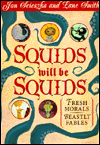
Interested? Squids Will Be Squids, Fresh Morals and Beastly Fables from Jon Scieczka and Lane Smith of Stinky Cheese Man fame, model Aesop-like fables with humorous morals. The philosophy of the authors: “"If you can't say something nice about someone, change the guy's name to Donkey or Squid."

Grasshopper Logic is one of my favorites, see if it sounds like anyone you know:


“One bright and sunny day, Grasshopper came home from school, dropped his backpack, and was just about to run outside to meet his friends. “Where are you going?” asked his mom. “Out to meet some friends, “ said Grasshopper. “Do you have any homework due tomorrow?” asked his mom. “Just one small thing for History. I did the rest in class.”


And so Grasshopper’s mother lets him go to play, warning him to be back for dinner.

After dinner, Grasshopper’s mom reads the “small thing” he needs to finish:

“Rewrite twelve Greek myths as Broadway musicals. Write music for songs. Design and build all sets. Sew original costumes for each production.”


Of course, Grasshopper’s mom asks how long Grasshopper has known about the assignment, to which he answers (Let’s moan and all say it together now!) “I don’t know.”

Moral? “There are plenty of things to say to calm a hopping mad Grasshopper mom. “I don’t know” is not one of them.”

This is a great mentor text for ideas and voice, allowing students to change those things that happen to them into fables with morals that all can live by. Of course, you have to be careful of the bathroom humor (Skunk, Musk Ox, and Cabbage are hanging out on a porch...Moral: He who smelt it, dealt it) but some modern day morals are also included (Breakfast is the most important meal of the day. Don’t play with matches.)The fables in the book also celebrate clarity and brevity in writing – none are more than a two page spread, complete with wonderful illustrations.


Don’t think you have time for this type of writing when you have to prepare for the T-E-S-T? Fables from The Panchatantra,from India, appeared on our state tests last year. Interestingly, students seemed to do well with the literal questions….and not so well on the abstract pieces related to the moral. Can’t think of a better, and more engaging, test prep activity than this one!

Saturday, October 21, 2006

Looking at Student Work

I just finished presenting at the New York State Middle School Association’s Annual Conference. My session today focused on looking at student work as a means of building a professional learning community, something I have been investigating through my work at CSETL. Eight teachers stayed on a rainy Saturday morning to engage in the protocol and discuss how they could bring this back to their districts. What a rush!!

I worried a bit about how this might work – 4 science teachers, 1 ELA teacher, 1 Spanish teacher, one central office administrator, and one building level administrator sitting around the table examining writing in social studies!! But we had some powerful conversations about grammar and spelling, organization in writing, clarity of ideas, and technical writing. Resources and strategies were shared, people started to view student writing in a different way, and most importantly, we learned from one another!!

It reaffirmed for me that teachers of all content areas are concerned about student writing – but many of them don’t seem to have the resources available to them to know how to address it. One of the most powerful moments came when one teacher shared the Four Square writing organizer. She had used it as an example and when others indicated that they weren’t familiar with it, the teacher did a mini lesson with science content so that the teachers could understand it. Nothing formal – just sharing what worked for her. During that discussion, the ELA teacher asked that if they use this method, the teacher not force conclusions by having the students write “In conclusion….” He expressed that it made writing sound artificial and the students could simply do without the phrase and sound much more authoritative. A poignant plea from the ELA house – and the teachers heard what he had to say, promising to not demand that kind of transition as a conclusion.

My hope is that the teachers take the model we engaged in and bring it back to their school districts. Everyone seemed to value looking at student work – regardless of the content area. They recognized the need to share their expertise with others, and tap that of their colleagues. There were lots of questions and some pretty valid concerns, but it was a two for one day. The teachers experienced a protocol to build a professional community and learned a whole lot about writing in the process. We didn’t start a professional learning community today – but we planted the seeds for several.

Tags:

Thursday, October 19, 2006

It was a dark and stormy night...


We had a surprise snowstorm here last week. The devastation was something that I had previously thought was no longer possible in this day and age. People in the area are still without power – sleeping to the hum of generators feverishly working to pump water out of basements (the rain hasn’t stopped) and keep freezers cold.

We were lucky. I lost power on Friday and got it back on Monday night. In the meantime, the entire family (sister/brother and spouses, nieces and nephew) camped together at my parents house with a wood stove burning and a two-inch battery driven television providing news updates. Late Saturday – the party moved to my sister’s house when her power returned.

It was inconvenient. It was a tiring. It was cold. But it was also amazing! Petty things no longer mattered – everyone pitched in to carry wood, cook giant meals of rapidly defrosting food, share what they had in flashlights and batteries. And the best part of all? Waking up in the morning to find that my nieces had snuck into bed with me to “snuggle.”

So when I thought about what book to feature this week – there was no doubt it was “The Relatives Came” by Cynthia Rylant. It’s the story of a summer visit by relatives from Virginia. All the joys and pitfalls of having relatives stay for an extended period of time are depicted!! The book is RIPE for text-to-self connections and is a great read aloud for the younger grades. It could certainly help kick the old “What I did last summer” essay up a notch!! For you Traits users, it is also a great example of sentence fluency and I have a lesson posted on the WritingFrameworks wiki based on it.

Perhaps most importantly, it’s just one of those picture books that just might have been written more for the adults than for children.
“When they finally had to leave, they were sad, but not for long. They all knew they would be together” ... forever!


Tuesday, October 17, 2006

A (Re)Cursive Debate

Via the TLN Teacher Voices Blog and MiddleWeb's newsletter comes this:

A recent Washington Post story, "The Handwriting on the Wall," (10/11/06) reported on the decline of handwriting instruction in elementary schools and the likelihood that future generations will not acquire the cursive handwriting skill.

Among the story's highlights:

• Researchers think writing by hand may be important to cognitive development.

• Teachers say they don't grade down for bad handwriting but one researcher begs to differ.

• Handwritten documents are more valuable to researchers and legal experts.

• Messages written in hand create a greater sense of personal authenticity.

• Many educators shrug—they are busy with other priorities in an increasingly digital world.


I'm not going to comment on this one (I think you all know where I stand anyway!) but encourage you to read the TLN Blog to see how others responded and post your thoughts - here or there!!

Thursday, October 12, 2006

Inspiring Young Writers (of all ages!)


I wish that I could have the vanity of my 1st grade niece and the confidence of my pre-school niece, the swagger of my 3 year old niece and the giggles of my 2 year old nephew – but those days are long gone. Now I have the bluff of a cough-cough year old teacher!!

I “force” my writing workshop participants to write – and sometimes draw -because I believe that you can’t really teach writing unless you participate in it as well. But I realize, particularly when it is after a very long school day when a bazillion other things are on their minds and they are in front of their colleagues and out of their comfort zone, that coming up with something to write about is not as easy as it seems. And so it is for our students!

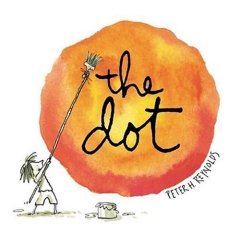
The book that (at least temporarily) gives me writing confidence is The Dot by Peter H. Reynolds, and even more the companion book Ish. First, The Dot!

Vashti struggles with in art class proclaiming “I just CAN’T draw!” Her inspirational teacher has her begin with “just a mark – and see where it takes you.” Before long – Vashti is the inspiration to a little boy who just “can’t” draw either. Along the way, Vashti experiments and finds her own “voice” in her work. The colorful artwork inspires the reader, while showing the real value of persistence and effort. I love this book and it inspires me to “make my own mark.” Imagine what sharing this thought to the struggling writer might do – to just make a sentence and see where it takes you. Or draw a picture and see what it inspires. To just put something down, feel free to experiment with words, play with them and make them your own – the liberation that writing can bring!! I love this book!! (Have I mentioned this already?)

And then came “Ish.” Quite the opposite of Vashti, Ramon looooves to draw. “Anytime. Anything. Anywhere.” (You’ll be amazed at the anywhere!) Then, as fate would have it, his confidence is crushed by his older brother who laughs at his drawing of a vase of flowers. After many months of trying and reams of crumpled paper, Ramon gives up. He’ll never draw the perfect vase of flowers. But his little sister has been collecting all the discards and created her own “crumpled” gallery. When Ramon protests that it doesn’t look like a vase of flowers, she replies “Well, it looks vase-ISH!” Ramon found his –ish; more drawings happened, even poems happened. This made me think about all the hullabaloo about cursive writing and penmanship. Does it matter whether a letter is formed perfectly? Is it acceptable to be just “legible” and not perfect? I value the creativity – the risk taking – of writing. As long as I can read it, the letters don’t need to be formed perfectly, it’s the word behind it that counts.

Think about these books as you work with aspiring (or inspiring) writers – how can we encourage writing and show them what really matters?


(Friday's post a little early - I have a superstitious streak!)

Friday, October 06, 2006

Teacher Man


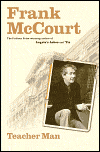
On what seemed to be a never ending flight to Phoenix with my grandmother, mother and aunt – I was able to start and finish Frank McCourt’s latest novel, Teacher Man.(An excerpt can be read here.)

I like to know what drives writers to write as they do – and am thrilled when they share. It serves as such a wonderful model for frustrated writers of every age to hear how those who have been published and received a public stamp of approval (can we say “Oprah”) share their ups and downs as well. Writers on Writing from Australia and California via podcast are two great examples of clips to show students. Reminiscent of Stephen King’s On Writing, McCourt shares the story of his teaching life – specifically the teaching of writing. While I was distressed at times by his attitude towards teaching, I found myself reading on to find what pearls of wisdom this accomplished author imparted to his students.

While this might not be a book that I would share with students, I think that teachers of writing might be inspired by reading it. Here are some “gems” that I captured:

1.We need to be learners alongside our students – and tell them that. At the beginning of each term, McCourt would tell his Creative Writing classes,
“We’re in this together. I don’t know about you, but I’m serious about this class and sure of one thing: at the end of the term, one person in this room will have learned something, and that person, my little friends, will be me.”(p. 199).
McCourt characterized this as presenting himself as the most eager and “elevating himself above the masses” but I think it is a smart strategy – particularly in writing. I would often show my students my “writing” where they would give me feedback, suggest revisions, and sometimes tell me I needed to start again. It was easier to have them work with one another once I took the risk and shared what I wrote. And I learned from them – particularly those who struggled with writing themselves. They gave me insights into my own writing – and into the “voice” I used that I could not find myself. Being my audience, they strengthened my writing as I hoped to strengthen theirs.

2.Sometimes, the most powerful teaching moments come when you go with the flow. In Chapter 13, McCourt share the story of how the adolescent need for food turned into a powerful reading/writing/performance of recipes complete with music. It brought his class together as a group and they practiced some power peer review – yet throughout it all, McCourt could think only of the “other” teachers at the school who were dutifully following “The Curriculum.” Yet somehow – out of chaos, an amazing curriculum responsible lesson emerges!! Students find “voice” in writing restaurant reviews based on “Mimi” and learn some powerful lessons in persuasive writing. We could all learn a lesson from this – how many times have we wanted to capture the enthusiasm of our class, only to be stopped short in our journey to the “end of the curriculum?”

3. Grammar matters – but it is not the life and death of writing! There are several instances throughout the book where McCourt admits his grammar faults. He cannot diagram sentences well – in fact, at one point, a student takes over the class. But he attempts some amazing lessons on parts of speech (including an analogy to a ballpoint pen) and shares those discussions with the reader. What is powerful about this are the conversations – he lets kids say they don’t see the point and models well how to encourage student questions of authenticity to turn them into learning experiences. I am not a grammar guru myself – but this is how grammar should be done!!

A nice airplane read – I wonder what our stories would tell us about our teaching?

Wednesday, October 04, 2006

Some musings...

Thinking a bit about the reading/writing connection…..I was asked in a workshop yesterday how I would start using Step Up with students. My answer was active reading strategies. I think we need to start with what someone else has written in order to model what we are expecting from our students. It’s also a nice way to “fit it all in” – writing and reading, that is.

It seems our state is also thinking about the reading/writing connection. In announcing the Grades 3-8 ELA Assessment scores, the Commissioner’s powerpoint indicated that we need to have students read 25 books a year and write 1000 words a month to start to see some gains. Every time I share that slide, folks gasp!!

OK – so maybe 25 books a year seems untenable – do magazine articles count? Newspapers? Textbooks? Do blogs and MySpace count? If we broke it into chunks of text – would that make a difference? Bottom line is still the same – our kids need to read, more! Does this surprise anyone?

As for the 1000 words a month – that seems doable. In fact – it seems that bar is set a little low. When you think about all the content areas kids are covering, if they wrote in each of those we’d easily have 1000 words in a week. My niece Amelia who is in first grade, only has math and ELA homework. (That’s right – homework in first grade! Every night!) But she’s not writing – not as much as in kindergarten. She is filling in words on a blank and practicing her letter formation. She’s not getting her 1000 words that way!!

Now – I am not saying that I want her writing the Great American Novel in first grade, or even an essay. But exercising writing muscles should be encouraged – whenever possible. If we ask students to practice writing the perfect three sentence paragraph from Step Up or share an “I wonder…” after reading text and put it on an index card – we are already 25 words towards our quota!! Relatively painless, easy to assess, and more importantly writing!

These are my musings – here’s my challenge. Let’s collect some soft data on how much we are having our students read and write for just one week.

1. What are they reading? How many “paragraphs” of text?
2. Are we having them write about their reading?
3. What are we having students write? Approximately how many words for each writing assignment?
4. What’s your daily total? What’s your weekly total?

I bet you’ll be surprised!!

By the way – you just read (and I just wrote) 433 words.


Sunday, October 01, 2006

Word Choice made easy!!

From a post by fellow blogger, Passionately Curious, comes a nice "gadet" to help teach students word choice. Using Word of the Day from Primary Concepts, this innovative second grade teacher uses it in this way:
A new word is introduced several times a week during our Morning Meeting or as a time-filler in between activities. Some children have really taken to the challenge of using the word five or more times during the school day or at home. The word is written on a 3x5 index card and placed into our Word Jar (a large pickle jar). Throughout the year, we will pull a word out of the jar to see if the kids can remember its definition and use it in a sentence.

How are you using word choice?

Saturday, September 30, 2006

Sweet, Sweet Memories


I will be leaving next week to visit an aunt in Phoenix. My mother, another aunt, and I will be accompanying my grandmother on this trek west. Probably not anything unusual but we are very nervous about it as my grandmother was diagnosed two years ago with Alzheimer’s disease. We aren’t sure how the trip will go – she no longer adapts well to change. She knows we are going on vacation and is very excited – we’re just not sure she understands how we are getting there. So – family has been on my mind lately.

Family is very important to me and they always come first – although they might complain that work does. So, when I find text that makes personal connections I am thrilled. I can share it with others to model where authors get their ideas and to show that we can write about even the smallest things. I recently found a new mentor text for me courtesy of my nieces Scholastic Book Club.

The Hello, Goodbye Window by Norton Juster with pictures by Chris Raschka gives a child’s version a visit to her Nanna and Poppy. To get to their house, everyone must pass by the kitchen window (the Hello, Goodbye Window) – which looks like a regular window but it’s not. The child tells details about her grandparents and what they do during their visit – all with great connections.

Here are some of mine:

“The kitchen is where Nanna and Poppy spend most of the time. So you can climb up on the flower barrel and tap the window, and duck down and they won’t know who did it, or you can press your face against the glass and frighten them.”
My grandparents kitchen was in the back of the house with a big window. My Babcia often sat at the kitchen table playing solitaire, my DziaDzia sitting at the end of the table reading the paper. At night – you could see the glow of the light and know Babcia might be washing dishes at the sink, while my DziaDzia was eating that day’s sweet treat. My father would hold us up to knock on the window and eventually, we could reach it ourselves. Of course, when he heard us coming in, my DziaDzia would hide and jump out to scare us when we actually entered the house.

Of course, the kitchen was rarely empty and often had various other relatives in it as well. My grandparents house seemed to be the center of the universe – where everyone gathered for the cake and pretzels that were in endless supply, to play a quick hand of cards, to have a cup of tea on the way to run errands, to just get love.

“Nanna says she even used to give me a bathe in the sink when I was little – really!”

There are many, many of those photos tucked away in my family, all with the requisite soapy hairdo of course. My mother has carried on the tradition with her own grandchildren. And since she has a very large stainless steel sink – they took baths in there just a few weeks ago, even though they are five and three!! What is it about the kitchen sink bathtub that brings back such great memories?

“When we leave we always stop at the window to blow kisses goodbye.”


Leaving was never something simple and could often be a 20 minute ordeal. My Babcia would stand in the window while my DziaDzia would walk everyone to the car. We’d blow kisses to everyone and keep waving until we pulled out of the driveway and down the street. In nice weather, they’d even walk to the end of the driveway to wave good-bye. It made you feel as if you would be missed – and that you needed to go back soon.

My grandparents’ house was something special.

Wednesday, September 27, 2006

Writing 'Round the Web

I thought I would take the time to share what some other folks are doing with writing in the incredible blog world we live in. I have most of these folks in my Bloglines account - you might want to consider creating one yourself after you start reading!!


First, A Year of Reading tipped me off to a site that writes haiku for every New Yorker article. I'll admit it, at first I thought "This person has waaay too much time on their hands!" Then I thought,

For current events
We want kids to summarize
Why not a haiku?


Sorry - couldn't resist!

Bud the Teacher made some connections to what I am trying to do here when he shared a post from Kevin's Meandering Mind asking teachers to contribute to a book he is writing in collaboration with researchers from the University of Massachusetts Amherst:

Practically everyone agrees that writing is changing, as writers compose more on screen than in previous generations. But how has this change in what we consider “writing” affected teachers’ classroom practice? In the context of emerging multiliteracies, what are teachers’ goals for their students’ learning? How have teachers revised their definitions of writing in the age of digital literacy? How are these expressed as changes in their classroom practice? And what new writing do the students produce?


Consider reflecting on your own practice and contributing to this!

Finally, Coot Cat Teacher shares some powerful lessons about peer review. It seems that another great teacher is having their students conduct a peer review of the work Cool Cat's kids are doing on a wiki. The kids give some great feedback about writing/storytelling in this digital world. What a great exercise and way to get authentic feedback!!

Of course, reading and writing are closely connected so you may find these links interesting as well. David Warlick over at 2 Cents Worth hooked me up with a powerful article that I will be using a lot entitled "What is the worth of words?" The article talks about a the results of an adult literacy assessment which found that the reading proficiency of college graduates has declined in the past decade. The most powerful part of the article is an editorial predicting the rate of decline by 2025. (Hmmm....before you read the article, knowing that no child will be left behind by 2014, what do you think the state of reading might be?)


And of course, Will Richardson continues to push our thinking with his recent article at The Pulse on what reading means in this new Web 2.0 world. From that article, here are some final questions for you as you consider reading and writing in YOUR classroom:
Most importantly, as a school leader, are you thinking about how this newenvironment plays out for your students? Are these new literacies a part of your school's curriculum? Students are reading and writing (in manydifferent media) in these spaces already, but are we teaching them how to do it well? Are they learning to become editors as well as readers?

Friday, September 22, 2006

Diffendoofer Philosophy


Okay – so I don’t really use this book for writing. But given that we have finally received the ELA scores for our state and everyone is clamoring to see how neighboring districts fared in comparison and trying to figure out where to lay blame, I thought I would share Hooray for Diffendoofer Day!!

Created from the last sketches of Dr. Seuss – this book honors those teachers who truly are “outside the box” and put their students, not tests, first. Ironically, those teachers are embodied by a teacher named Miss Bonkers! Students at Diffendoofer learn” how to tell chrysanthemums from miniature poodles” and other important skills. But then comes the TEST!! Students must pass a standardized test or face going to Flobbertown where everyone does things the same. But the students are inspired by Miss Bonkers who proclaims “"We've taught you that the earth is round,/ That red and white make pink,/ And something else that matters more-/ We've taught you how to think." Low and behold, and without test prep, the students of Diffendoofer school pass with a mathematically impossible, but nonetheless amusing percentage.

I have come to firmly believe in what I call the Diffendoofer Philosophy: that if we teach to student interests, give them choice, and engage them in thinking, the will be able to pass any test that is thrown at them. It is the same with writing – we don’t need to give them four document based questions a week or have them write essays to inauthentic prompts in order to teach them to write. We should encourage their creativity, nurture their enthusiasm, and promote risk-taking in their word choice. In other words, make it enjoyable and not a chore.

I believe we can do it– Business First be damned!!

Tuesday, September 19, 2006

Reading-Writing Connection

The Center for the Book in the Library of Congress, in partnership with Target Stores and in cooperation with affiliate state centers for the book, invites readers in grades 4 through 12 to enter Letters About Literature, a national reading-writing contest. To enter, readers write a personal letter to an author, living or dead, from any genre-- fiction or nonfiction, contemporary or classic, explaining how that author's work changed the student's way of thinking about the world or themselves. There are three competition levels: Level I for children in grades 4 through 6; Level II for grades 7 and 8, and Level III, grades 9 - 12. Winners receive cash awards at the national and state levels. For information contact the LAL Project Director at lettersaboutlit@epix.net.

You have got to read the amazing work from last year's winners!!

Sunday, September 17, 2006

A Little Cheese with that Whine?

Participants in my writing workshops have heard me get on my soapbox about the value and power of a good rubric. (In fact – I rarely limit this to my writing workshops, this is how strongly I feel on the topic!) I firmly believe that we need to provide students with explicit criteria for their success in order to give them a fair shot in education. To that point – I have often shared a rubric on whining that I have internalized when working with teachers and students!!

Via A Year of Reading I found this great companion piece to the rubric which would also make a great listening/note-taking exercise for students. NPR recently held an interview on “The Joys and Perils of Whining at Work’ with Renee Montagne. This 3 ½ minute snippet is great for students to use with 2 column notes (Step Up to Writing strategy). I also envision students writing their own “whines” (voice!), writing their own rules for “Whining in the Classroom” (voice, organization, ideas), or making their own “Joys and Perils of (BLANK) in school podcast (ideas, voice, integration of technology!!)

I am still playing with how I might use this myself but the ideas are certainly flowing – look for it in a workshop soon!


Image from The New Zealand Herald, "Work, the horror of it all."

Friday, September 15, 2006

Constitution Day!


With Constitution Day on Monday, I thought I would share with you two GREAT books that not only look at writing but also focus on this historical document!


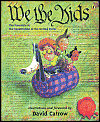
The first is "We The Kids" illustrated by David Catrow. The text for this is the preamble to the Constitution, but the illustrations help students to understand the difficult words and concepts contained within. I have posted a 6 Traits lesson plan for this book on my wiki.


The second is Shh! We're Writing the Constitution by Jean Fritz with illustrations by Tomie dePaola. This is a great book for grades 4-6 and Jean Fritz does a first rate job showing the personalities of our Founding Fathers and telling the story of the creation of this document with trivia mixed in. In addition to tradition writing activities like creating a class constitution or Bill of Rights, this book is an excellent piece of literature to begin discussing voice.


One final note for older students, there is an excellent lesson plan in the September issue of Social Education from the National Council for the Social Studies on The Founder's Library. The lesson is based on a permanent exhibit at the National Constitution Center in Philadelphia and has students examine the ideas and writings that influenced the Founding Fathers. A great lesson for examining historical documents but also for referencing the power of prior knowledge.

Saturday, September 09, 2006

Better Late Than Never!!


Wow! Friday comes fast in a shortened week! My apologies for having the Friday book posted on Saturday morning!!

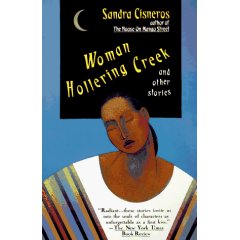
Since it is the first week of school for kids, I thought I would share one of my favorite adult reads that has a poignant story right in the middle. Woman Hollering Creek: And Other Stories by Sandra Cisneros is a collection of stories about Mexican-American women. Throughout the book, the author uses powerful descriptions of people and places that excerpted would be wonderful examples to show students about the power of details. (My own copy has many, many Post-It notes for this very reason!)

However, the most compelling lesson and one that extends far beyond writing, is in the short story “Eleven.” This quick four pages tells the story of a girl on her eleventh birthday and a powerful moment in school that will mark that day forever in her mind. It has great descriptions, powerful voice, and is sure to evoke many memories from the reader.

My favorite writing activity to do after reading the story is to have the readers retell the story through the eyes of another character in the story (the worksheet and directions for this can be found on my companion wiki). It is great to hear the stories that come from participants with this activity and more importantly, to ask them where the inspiration for the story came from. In fact, many are reluctant to put the writing away and often finish it so that they can share it with their students. A great lesson exercise to practice the trait of voice.

Happy reading!

Friday, September 01, 2006

If it's Friday, it must be.....


In order to keep myself focused on writing and the tools that we need to teach writing well – I’ve decided to make every Friday a “Reading to Help Teach Writing Day” in which I’ll share the books that I use (and find) to help teach writing.

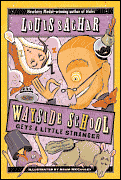
Since the opening of a new school year is here – I thought I would start with Wayside School Gets a Little Stranger by Louis Sachar (author of Holes). I love this entire series but this book in particular is rich with writing connections!!

Chapter 11 is titled “Voices” and is great for those teaching using the 6 Traits. The students are all introducing themselves to Mr. Gorf (a substitute teacher) and the voices are all unique!! Sharing this chapter with students helps them with the trait of Voice, as well as Ideas and Word Choice. Particularly relevant for those who might be teaching dialogue in writing.

I also like Chapter 14, “A Light Bulb, A Pencil Sharpener, a Coffee Pot, and a Sack of Potatoes” when working with Step Up to Writing and two-column notes. This chapter covers a science experiment on gravity, in which the students try to determine which object dropped from the window will arrive at the ground the fastest. I start with reading the title and asking “Which of these would hit the ground first if we dropped them from 13 stories up?” Students would write their guesses in the upper right hand corner of the paper. I then have students fold their paper in half (hot-dog style!) and write each of the objects in the right hand side. I explain that I am going to read the story aloud and as they hear about what happens in the story – they should “jot” notes in the right hand column. I remind everyone that “jot” means just one or two words – not copying everything that I say!! After reading the story, I ask students to look at their original guess about which object would hit the ground first and see if they were correct. Depending on the classroom – the discussion could go on from here: more note-taking, writing a paragraph, or even launching a gravity lesson!!

Chapter 5, “A Story With a Disappointing Ending” is another gem to help students with crafting their own endings and nice “hook” to dealing with conclusions.

All in all – Wayside School Gets Stranger is a quick and entertaining read rich with writing connections!! Enjoy! And Happy First Day of School!!